Overview
Profile


At Omo Bank, our identity has never been confined to the walls of a branch or the lines of a ledger. We were born from the soil of this region, raised among the farmers, market traders, and pastoralists who form the backbone of our economy. “People First” is not a seasonal campaign tagline—it is the permanent architecture of our civic duty. It reminds us daily that behind every loan number is a family’s dream, and behind every savings account is a mother’s plan to educate her children. This philosophy requires us to listen deeply, to understand the rhythm of local life, and to respond with more than sympathy when that rhythm is violently disrupted. We have built our reputation on walking alongside our customers through seasons of plenty, but our true character emerges when the seasons turn cruel. In a world where financial institutions often retreat during hardship, we move closer. Our commitment to you is not transactional; it is a pledge written into our charter, compelling us to act boldly and compassionately when crisis hits, because your survival is, and always will be, our highest purpose.

The landscapes we serve are breathtakingly beautiful but brutally unpredictable. Our clients do not merely face theoretical risks; they live through the prolonged droughts that turn fertile fields into cracked dust, the flash floods that wash away entire harvests in a single afternoon, and the creeping desertification that swallows grazing lands season by season. A smallholder farmer who borrowed for seeds and fertilizer can watch a year’s work vanish in a month of rainless skies, turning a manageable loan into an impossible burden. Alongside these environmental pressures, man-made shocks—civil unrest, border conflicts, and sudden displacement—tear communities apart without warning, forcing families to flee with nothing but the clothes on their backs and the memory of a home left behind. These intertwined crises do not merely disrupt income; they dismantle the social infrastructure of trust, hope, and forward planning. At Omo Bank, we witness this devastation firsthand through the faces of our clients who walk into our branches not with complaints, but with the quiet desperation of people who have done everything right yet find themselves at the mercy of forces they cannot control. Understanding this vulnerability is the foundation upon which we have built our entire response strategy, because you cannot protect what you do not truly comprehend.
Recognizing that traditional banking models often fail precisely when they are needed most, this year we made a decisive and deliberate reinforcement of our Crisis Resilience mandate. We implemented an immediate financial support framework designed from the ground up to serve as a shock absorber rather than a rigid gatekeeper. This framework is not a passive relief fund waiting for applications to pile up; it is a proactive, living system capable of sensing distress and deploying solutions in near real-time. We have empowered our local branch managers to bypass bureaucratic delays, trained our loan officers to become crisis first-responders who can initiate restructuring conversations within hours, and established a dedicated emergency liquidity pool that can be released instantly to affected regions. The mechanics are simple but transformative: when satellite data confirms a failed rainy season or credible reports surface of population displacement, we automatically trigger a cascade of support measures. These include immediate suspension of penalty fees, rapid renegotiation of payment timelines, and direct injection of emergency cash assistance through mobile wallets. Our framework operates on the principle that in a crisis, speed is not just a courtesy—it is the single most critical currency of compassion. By embedding resilience directly into our operating model, we ensure that when the ground trembles beneath our clients’ feet, Omo Bank is the solid foundation they can still stand on.
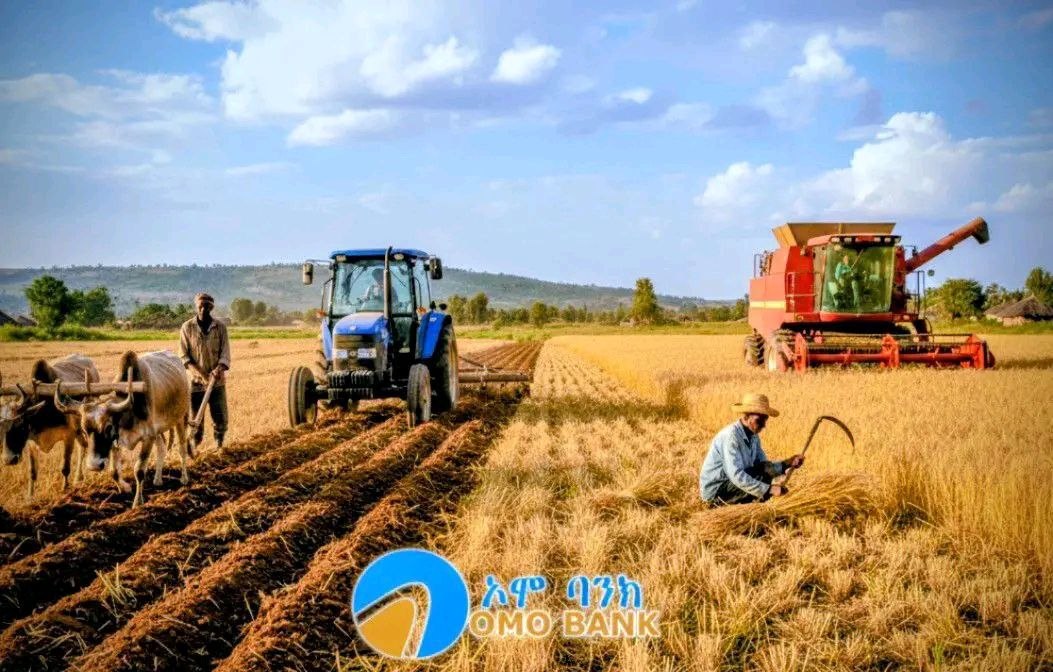
Agriculture is the heartbeat of our economy and the livelihood of a vast portion of our client base, yet it remains a profession uniquely exposed to the fury of a changing climate. When a drought scorches the earth and a farmer’s crops fail before they can bear grain, that farmer faces a dual catastrophe: the loss of expected income and the looming shadow of a loan that was taken in good faith. Under our immediate financial support framework, we refuse to treat that farmer as a statistic of default. Instead, we deploy a specialized agricultural resilience team that works directly with each affected household to restructure their obligations in a way that acknowledges the reality of the sky. This restructuring goes far beyond a simple deadline extension. We craft bespoke recovery plans that may include complete payment holidays for a defined period, significant reductions in interest rates for the restructuring term, and the provision of fresh working capital so that farmers can purchase drought-resistant seeds or invest in small-scale irrigation when the next planting window opens. Our loan officers sit under the shade of what remains of the acacia trees, listen to the stories of what was lost, and collaboratively design a path back to productivity. We also connect farm families to agronomists and resilience training programs, ensuring that recovery is not just about money but about knowledge that can withstand the next shock. We stand with the farmers who feed us not as silent creditors, but as active partners who share both the risk and the hope, because a barren field does not reflect a broken promise—it reflects a force of nature that we must navigate together.
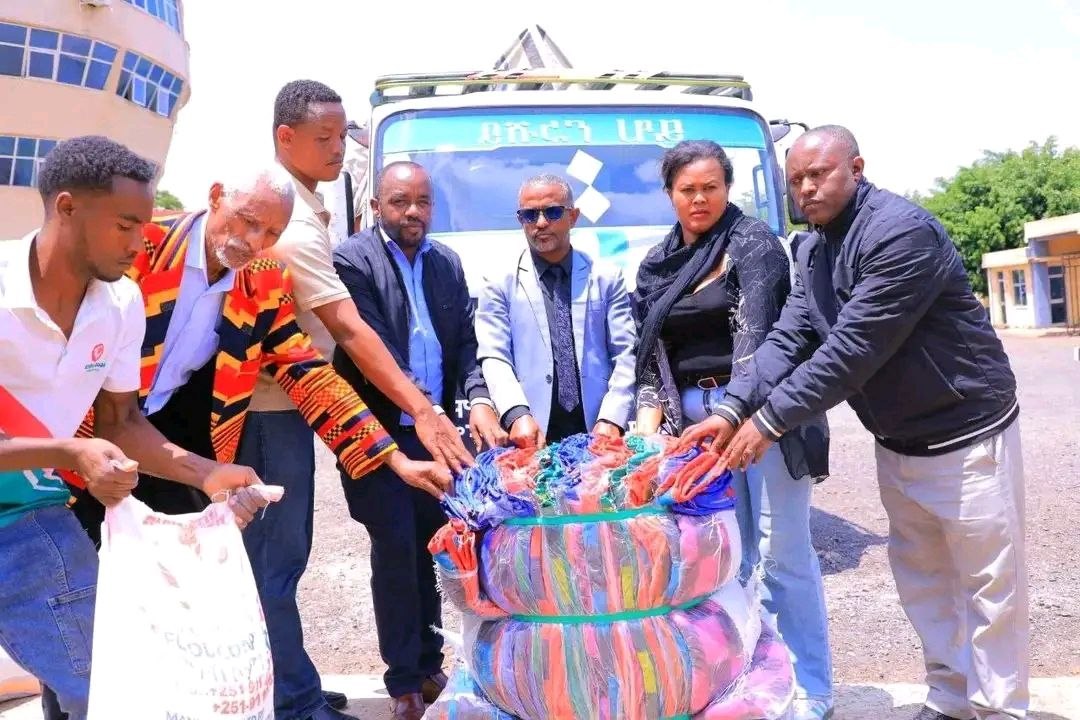
While drought and flood destroy livelihoods rooted in place, conflict and man-made crises destroy the very concept of place itself. When families are forced to flee their homes, they lose not only shelter but also the visible anchors of their financial identity—land titles, access to physical bank branches, and the community networks that vouch for their creditworthiness. In these terrifying moments, a bank can either become a forgotten abstraction or a lifeline. We chose the latter with absolute conviction. Our emergency financial aid protocol for displaced communities ensures that a person’s funds remain accessible even when their home is not. We have integrated deeply with mobile money platforms and biometric verification systems, allowing a displaced mother to withdraw cash, receive unconditional emergency transfers, or make essential purchases using only her fingerprint or a basic feature phone. We actively waive all transfer fees for customers in declared crisis zones and deploy mobile banking units—modified vehicles that travel to displacement camps and border settlements—to provide on-the-ground account recovery, identity reaffirmation, and immediate disbursement of hardship grants. Furthermore, we collaborate closely with humanitarian organizations to ensure our financial support aligns with broader food, shelter, and medical aid, creating a seamless web of care. In the chaos of flight, when so much humanity is stripped away, the ability to receive a notification that emergency funds have arrived and to buy bread for one’s children is a profound restoration of agency. Omo Bank becomes a steady, familiar voice in a sea of uncertainty, proving that our relationship with our customers is not bound to a postal address but to their inherent dignity.

In the quiet aftermath of a crisis, when the emergency tents are folded and the news cameras leave, the true, grinding work of rebuilding begins. It is in this long, unglamorous season that Omo Bank measures its real success. We do not tally our performance solely by the growth in our deposit base or the spread of our loan portfolio; we measure it by the number of farmers who plant again after a failed harvest, by the market women who restock their stalls after fleeing violence, and by the families who move from a displacement shelter back into a permanent home with a small but meaningful restart grant in their account. Profit is a necessary engine for sustainability, but it is not our purpose. Our purpose is the resilience we see in our clients’ eyes when they realize they have not been abandoned. This immediate financial support framework is the purest, most honest expression of our “People First” philosophy. It is a declaration that we are not a fair-weather partner. We will continue to refine our early warning systems, deepen our crisis response partnerships, and push the boundaries of what a socially responsible bank can be, because the next shock is always a possibility. Our promise, forged in the fire of current crises, is that Omo Bank will always stand as a safety net—woven from empathy, reinforced by rapid action, and held steady by the unshakeable belief that after every shock, we will recover, we will rebuild, and we will do it together.